
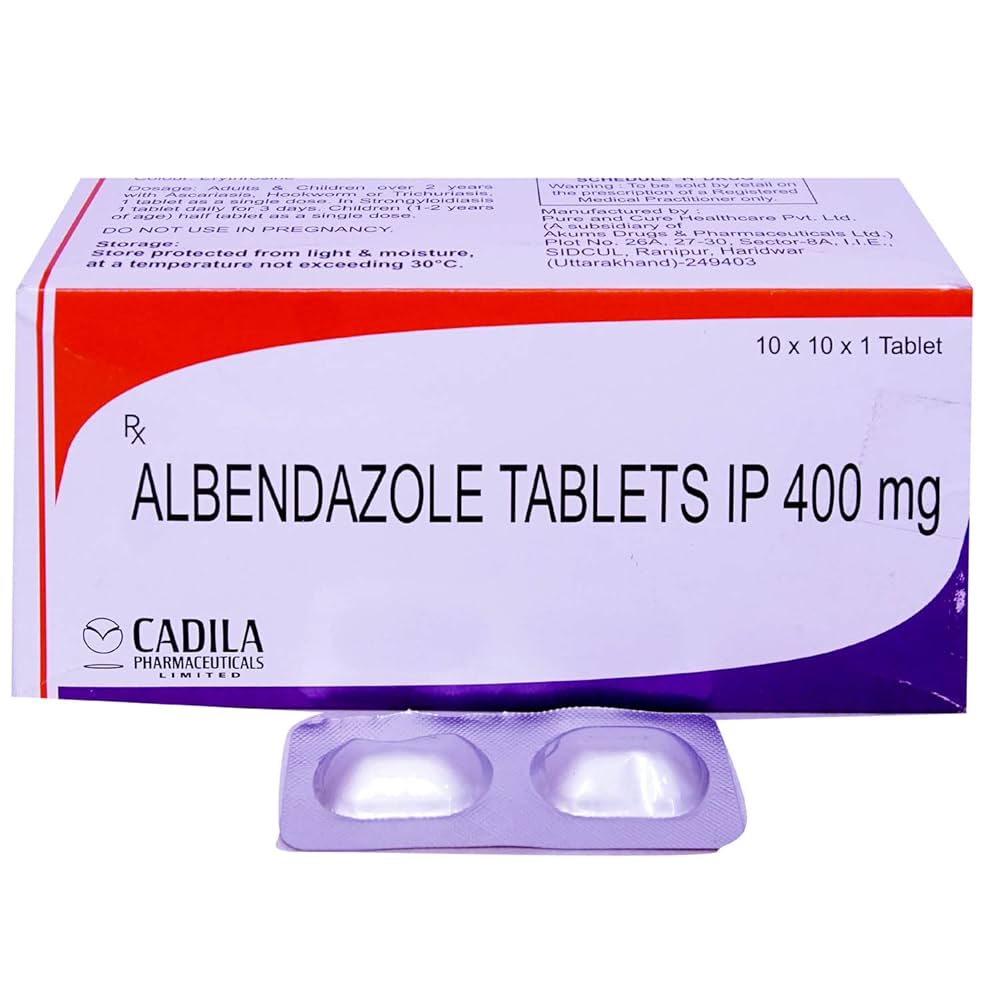
Albendazole 400 mg
Brand Name : Albendazole 400 mg
Active Ingredient (Generic Name) : Albendazole
Strength : 400 mg
What is Albendazole
-
Albendazole is a broad-spectrum anthelmintic (anti-worm) drug. It belongs to the benzimidazole class.
-
It is used to treat both intestinal worms and some tissue or cyst-forming parasites.
How It Works (Mechanism of Action)
-
Albendazole binds to β-tubulin in parasite cells, disrupting microtubule formation, which impairs worm mobility, structure, and ability to obtain nutrients (especially glucose).
-
It also affects the parasite’s energy metabolism, depleting glycogen, preventing egg production, and at higher concentrations might block metabolic enzymes.
Side Effects / Risks
Most people tolerate albendazole 400mg well, especially for short courses. But there are possible adverse effects, some more serious, especially with prolonged or repeated dosing, or in patients with poor liver function or other risk factors.
Common / Mild Side Effects
-
Gastrointestinal: nausea, vomiting, abdominal pain, discomfort.
-
Headache, dizziness (vertigo)
-
Fever
-
Reversible hair loss (alopecia) in some cases, usually mild and with longer or repeated exposure.
Less Common / Serious Side Effects
-
Liver effects: Elevated liver enzymes, hepatitis, possible hepatotoxicity. Monitoring may be necessary in long-term use.
-
Bone marrow suppression: Decreased blood cell counts, including white blood cells, platelets; rare cases of aplastic anemia, agranulocytosis.
-
Central nervous system: In special cases (e.g. with tissue infections like neurocysticercosis), there may be seizures or increased intracranial pressure because of immune response to dying parasites.
-
Allergic reactions: Rash, hives, hypersensitivity.
Precautions, Contraindications & Monitoring
-
Pregnancy: Albendazole is generally contraindicated in pregnancy (especially the first trimester) unless benefit clearly outweighs risk, because animal studies showed teratogenicity. Women of childbearing potential should use effective contraception during treatment and for at least some time after (guidelines vary).
-
Liver disease: Because albendazole is metabolized by the liver, patients with liver impairment are at higher risk for toxicity. Monitoring liver function tests is advised for prolonged treatments.
-
Bone marrow / blood disorders: In long or repeated courses, must monitor blood counts.
-
Hypersensitivity: To albendazole or benzimidazole derivatives. Avoid if known allergy.
Special Notes
-
Effect of food: Absorption of albendazole is increased when taken with fatty meals. (Though exact guidance can vary by country/brand.)
-
Treatment of neurocysticercosis / hydatid disease often requires adjunct therapy (e.g. steroids) to manage inflammation, and close clinical and imaging follow-up.
-
Repeated courses / retreatment may be necessary in some infections (e.g. Hymenolepis, strongyloides) if initial therapy fails or there is reinfection.
-
Age / weight adjustments especially in children under 2 years. Some forms (chewable tablets) designed for easier dosing.
| Tablet | 100 Tablet/s, 1000 Tablet/s, 10000 Tablet/s, 200 Tablet/s, 2000 Tablet/s, 300 Tablet/s, 400 Tablet/s, 500 Tablet/s, 5000 Tablet/s, 700 Tablet/s |
|---|
Reviews
There are no reviews yet.