

Inhalers are small medical devices used to deliver medicine directly into the lungs. They are commonly prescribed to people with asthma, chronic obstructive pulmonary disease (COPD), and other respiratory conditions. Inhalers help open the airways, making it easier to breathe.
Types of Inhalers
There are two main types of inhalers:
- Metered-Dose Inhalers (MDIs):
These are the most common inhalers. They release a specific amount of medicine in aerosol form when you press down on the inhaler. The medicine is inhaled through the mouth and travels directly to the lungs. - Dry Powder Inhalers (DPIs):
These contain medicine in powder form. You breathe in quickly and deeply to pull the medicine into your lungs. DPIs don’t use propellants — they rely on your breathing power.
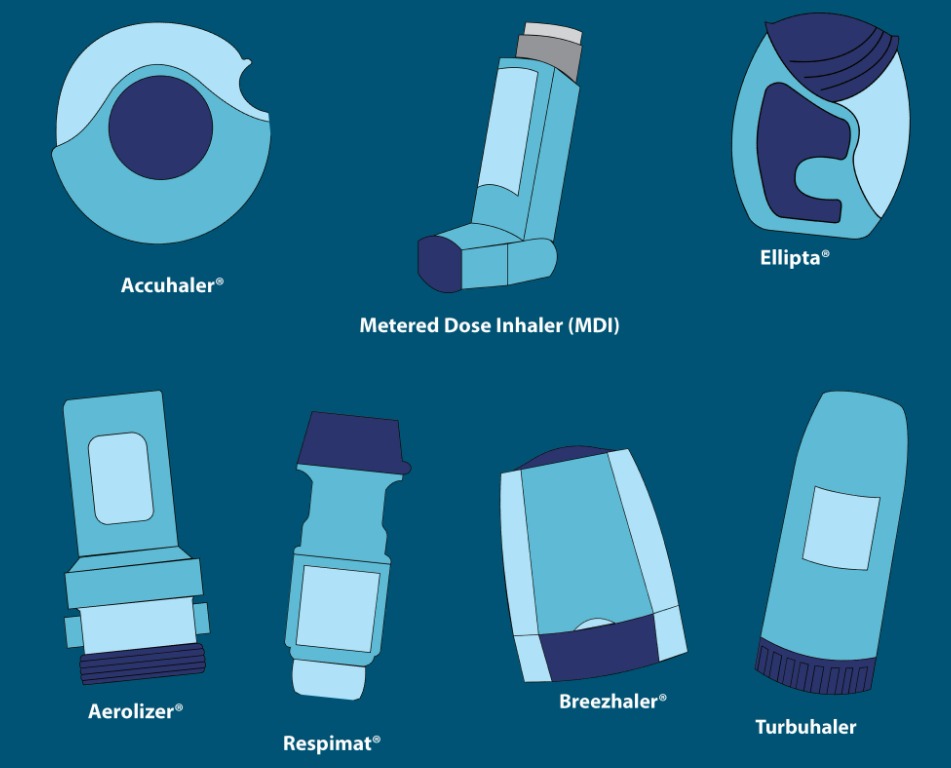
There are several types of inhalers available as per the medication. There are different categories of inhalers available which is discussed below.
Asthalin Inhaler
The Asthalin Inhaler is commonly used to treat chronic obstructive pulmonary disease (COPD) and asthma. It helps relieve breathing problems such as wheezing and shortness of breath.
Asthalin is often prescribed for children over the age of four and adults who experience asthma symptoms due to exercise or allergic reactions. It works by relaxing the muscles in the airways, making it easier to breathe.
Albuterol Inhaler
The Albuterol Inhaler is one of the most widely used treatments for asthma attacks. It acts as a short-acting bronchodilator, meaning it quickly relaxes the muscles around the airways to allow smooth airflow into the lungs.
This inhaler provides fast relief from coughing, wheezing, and tightness in the chest during an asthma episode.
Budecort Inhaler
The Budecort Inhaler is designed to control and prevent asthma symptoms. It contains budesonide, a corticosteroid that helps reduce inflammation in the lungs.
Regular use of Budecort helps prevent shortness of breath, chest tightness, and wheezing, making it an effective long-term asthma management medication.
Metered-Dose Inhaler (MDI)
A Metered-Dose Inhaler (MDI) is one of the most common inhaler types. It delivers a precise amount of aerosol medicine each time you press the button.
The medicine is inhaled through the mouth and goes straight into the lungs, providing quick relief. MDIs are often used with a spacer to make inhalation easier and more effective.
Nebulizer
A nebulizer is a device that converts liquid medicine into a fine mist, which is then inhaled through a mask or mouthpiece.
It’s especially helpful for young children, elderly patients, or those who find it difficult to use traditional inhalers. Nebulizers are often used in hospitals or at home to provide oxygen and medication for severe asthma or COPD attacks.
Dry Powder Inhaler (DPI)
A Dry Powder Inhaler (DPI) delivers medicine in powdered form. The user inhales quickly and deeply, which draws the medicine directly into the lungs.
DPIs don’t use propellants and are ideal for patients who can breathe in strongly. They offer fast delivery of medication and are often used for maintenance therapy in asthma and COPD.
How Inhalers Work
When you use an inhaler, it delivers medicine straight into your lungs where it’s needed most. This allows for fast relief and fewer side effects compared to taking medicine by mouth.
The medicine works by:
- Relaxing the airway muscles so the airways widen and breathing becomes easier.
- Reducing inflammation and swelling inside the air passages.
- Preventing symptoms such as wheezing, coughing, and shortness of breath.
Some inhalers provide quick relief during an asthma attack (called “rescue inhalers”), while others are used daily to control long-term symptoms and prevent flare-ups.
Benefits of Using an Inhaler
Delivers medicine directly to the lungs
Works faster than pills or syrups
Requires smaller doses
Reduces side effects compared to oral medication
Can be portable and easy to use anywhere
Using an Inhaler Correctly
Using your inhaler properly is important to get the full benefit. Always:
- Shake the inhaler if it’s a metered-dose type.
- Exhale fully before using it.
- Inhale slowly and deeply while pressing the inhaler.
- Hold your breath for a few seconds to let the medicine reach your lungs.
- Rinse your mouth after using steroid-based inhalers to avoid irritation.
What Is a Spacer and How Is It Connected to an Inhaler?
A spacer is a small tube-like device that attaches to the mouthpiece of a metered-dose inhaler (MDI). It helps deliver the medicine more effectively to your lungs.
To use an inhaler with a spacer:
- Remove the cap from the inhaler.
- Shake the inhaler well to mix the medication properly.
- Attach the inhaler to the spacer.
- Place the mouthpiece of the spacer in your mouth, ensuring a tight seal.
- Exhale gently, then press the inhaler to release one dose of medicine into the spacer.
- Breathe in slowly and deeply through the spacer, allowing the medicine to reach your lungs.
- Hold your breath for a few seconds, then exhale slowly.
Using a spacer makes it easier to inhale the full dose of medicine — especially for children, elderly patients, or anyone who finds it difficult to coordinate pressing and breathing at the same time. It also reduces the amount of medicine that stays in your mouth or throat.
How Does a Nebulizer Work?
A nebulizer is slightly more complex than a regular inhaler. It works like an air compressor, converting liquid medicine into a fine mist that you breathe in through a mask or mouthpiece.
Here’s how to use it correctly:
- Wash your hands thoroughly before handling the equipment.
- Assemble the nebulizer by connecting the air compressor, tubing, and mouthpiece (or mask).
- Add the prescribed medication into the medicine cup.
- Turn on the nebulizer — you’ll see a mist forming.
- Breathe normally through the mouthpiece until all the medicine is used (this usually takes 5–10 minutes).
Conclusion
Using an inhaler isn’t difficult, but learning the correct technique is essential to get the full benefit of your medication. Proper inhalation ensures that the medicine reaches your lungs effectively, providing faster relief and better control over breathing issues.